
Every spring, I reach the point where I start pacing around the garden beds, checking the weather forecast far too often, and convincing myself that maybe this year we can plant early. However, here in North Idaho, patience is part of gardening life.
The days are finally getting warmer, the snow is long gone, and sunshine has been pouring through the windows lately. Even so, it’s still a little too early for us to safely move our seedlings out into the garden full-time. Instead, we’ve reached the next stage of spring gardening: transplanting seedlings into larger containers indoors.
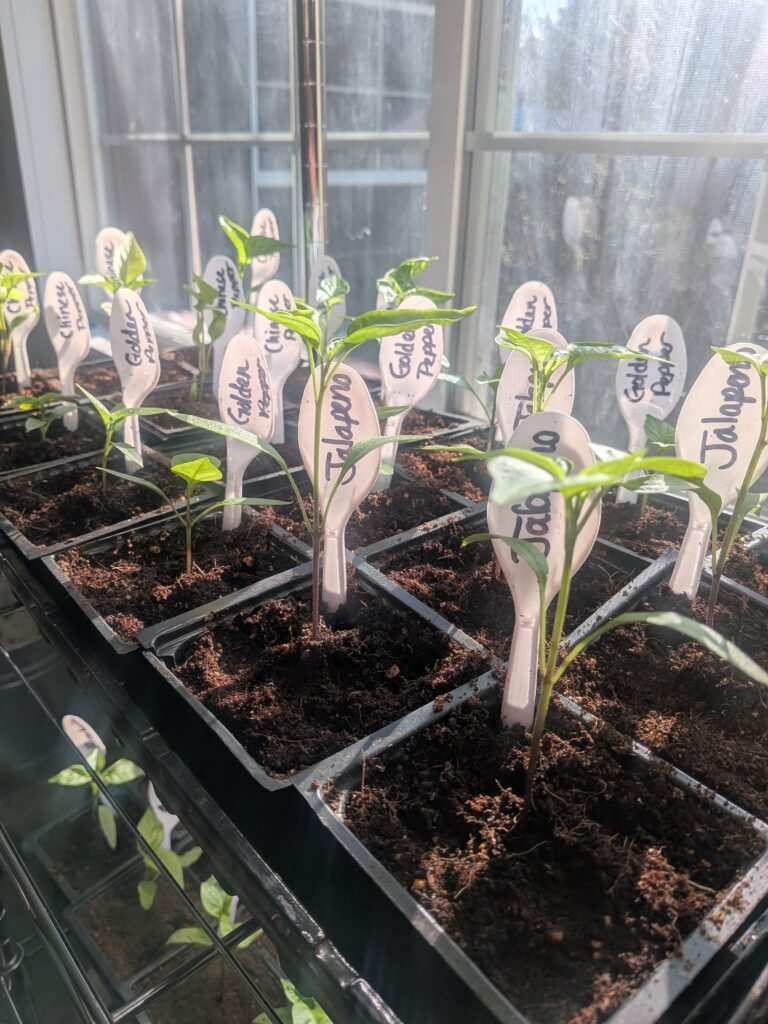
Right now, our growing rack is set up in our dining room near a large window, and honestly, it has become the unofficial centerpiece of the house this time of year. Every morning, I walk by with my cup of tea and check on the tiny plants like they’re part of the family.
If you missed the beginning of this year’s garden journey, you can read our post about starting seeds indoors for the growing season and see how these little seedlings got their start.
Why Seedlings Need To Be Transplanted
When seedlings first sprout, they usually have enough room in their seed-starting trays for a little while. But as they grow, their roots begin competing for space, water, and nutrients.
A few signs your seedlings are ready for larger containers include:
- Roots growing out of the bottom drainage holes
- Seedlings drying out quickly between waterings
- Plants looking crowded or top-heavy
- Growth starting to slow down
- Multiple sets of true leaves appearing
Transplanting them into bigger containers gives the roots room to grow stronger before the garden planting season arrives.
Why We’re Waiting To Plant Outdoors
One of the hardest parts of gardening in North Idaho is learning not to trust a random warm week in spring.
Even though the daytime temperatures have been beautiful lately, nighttime temperatures can still dip low enough to damage tender plants. Frost-sensitive seedlings like tomatoes, peppers, squash, and cucumbers are especially vulnerable.
As much as I want to get my hands in the garden soil already, I know rushing things usually leads to covering plants with sheets at 10 PM while nervously checking the weather app.
For now, transplanting into larger pots is helping bridge the gap between seed starting season and true garden season.
How We Transplant Our Seedlings
Our process is pretty simple and beginner-friendly.
1. Prepare Larger Containers
We move seedlings into slightly larger pots filled with fresh potting soil. I like using containers that are deep enough to encourage strong root growth but not so large that the soil stays soggy.
2. Water Before Transplanting
Watering the seedlings beforehand helps reduce transplant shock and makes it easier to remove them from their original trays.
3. Handle Seedlings Carefully
I try to handle seedlings by their leaves rather than their delicate stems whenever possible. If a leaf gets damaged, the plant can recover. A snapped stem is much harder to come back from.
4. Plant Deep When Needed
Tomatoes especially benefit from being planted deeper in their new containers since they can grow roots along buried stems.
5. Water Again After Transplanting
After transplanting, I give everything a good watering and return the seedlings to the growing rack near the window.
Our Dining Room Has Officially Become a Greenhouse
At this point, our dining room is doing double duty as a miniature greenhouse.
Between the growing rack, trays of seedlings, bags of potting soil, and watering cans nearby, spring gardening has definitely taken over part of the house. But honestly, I love it.
There’s something hopeful about watching tiny seedlings stretch toward the sunlight while the world outside is still waking up from winter.
And while I’m anxious to finally dig into the garden beds outside, transplanting seedlings feels like a reminder that gardening season is getting closer every single day.
Tips For Successful Seedling Planting
If you’re transplanting seedlings this spring, here are a few quick tips that help us:
- Don’t rush seedlings outdoors too early
- Make sure containers have drainage holes
- Use fresh potting soil for nutrients
- Keep seedlings near strong light sources
- Rotate trays occasionally for even growth
- Start hardening off plants gradually before outdoor planting
Looking Ahead To Garden Season
For now, we’ll keep tending seedlings indoors while we wait for warmer nights and safer planting weather here in North Idaho.
The garden beds are calling my name, though.
Every warm afternoon makes it a little harder to stay patient, and I already find myself planning where everything will go once transplant season outdoors officially begins.
Until then, our dining room greenhouse will keep us busy.
As we get closer to outdoor planting season, I’ve been gathering all of our favorite seed starting and gardening supplies in one place. You can browse our favorite homestead gardening tools and supplies here.
From our homestead to yours,
Eliza