
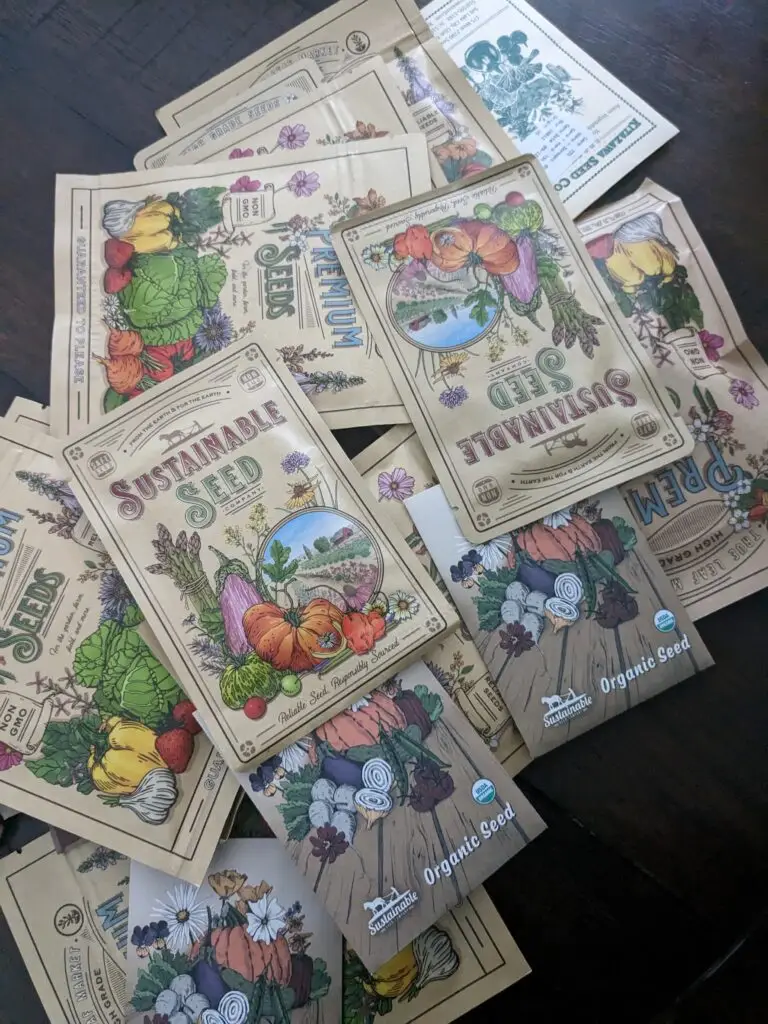
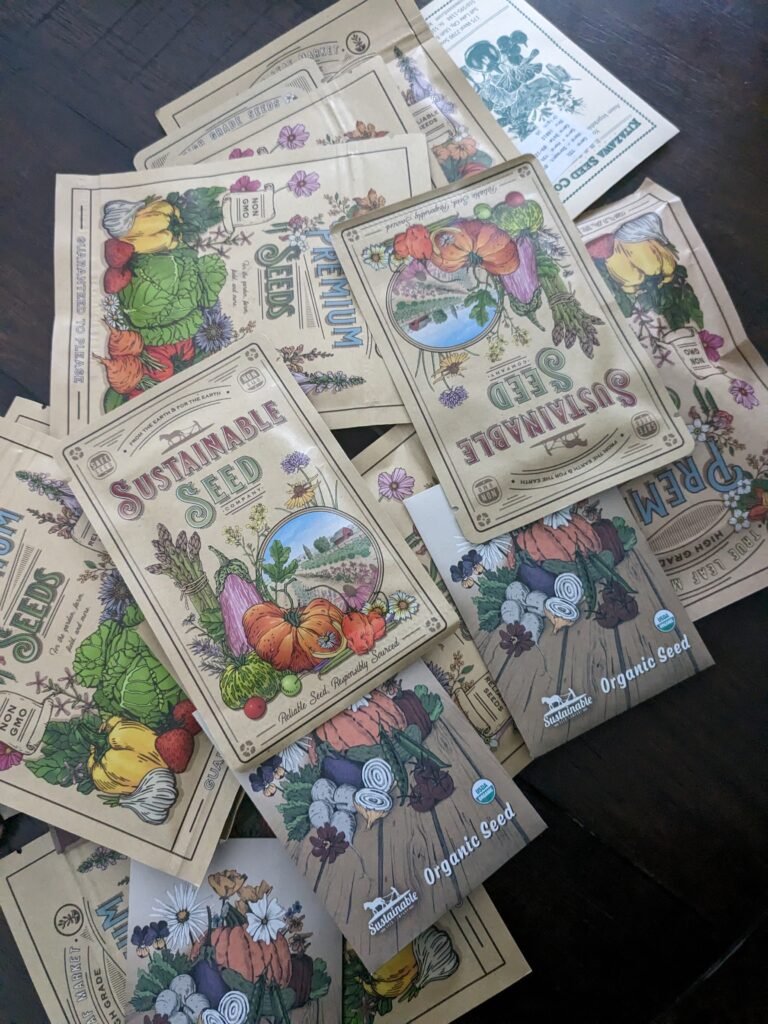
If you’ve ever dug through a pile of seed packets trying to figure out what you already have, you’re not alone.
Seed organization is one of those small tasks that makes a huge difference once gardening season begins. When everything is in order, planning your garden becomes easier, planting feels more enjoyable, and you waste less time (and money).
Over the years, we’ve settled into a simple system that keeps our seeds neat, easy to find, and ready to use.
Why Organizing Your Seeds Matters
It might not seem like a big deal, but having an organized seed collection can completely change your gardening experience.
When your seeds are in order, you:
- Avoid buying duplicates
- Quickly see what you have on hand
- Keep seeds in better condition
- Simplify your garden planning
- Feel more prepared going into the season
It turns something that could feel chaotic into something calm and manageable.
Step 1: Gather and Sort Everything
Start by collecting all your seeds into one place.
Go through them and sort into simple categories like:
- Leafy greens
- Root vegetables
- Tomatoes and peppers
- Herbs
- Flowers
This step alone gives you clarity and helps you see exactly what you’re working with.
Step 2: Check Seed Quality
Take a few minutes to look through each packet.
Set aside:
- Seeds that are clearly damaged
- Very old packets you’re unsure about
Keep:
- Seeds that are still in good condition
If you’re unsure about older seeds, you can always test them before planting instead of tossing them right away.
Step 3: Choose a Storage Method
You don’t need anything complicated—just something that keeps your seeds contained and easy to flip through.
Some simple options include:
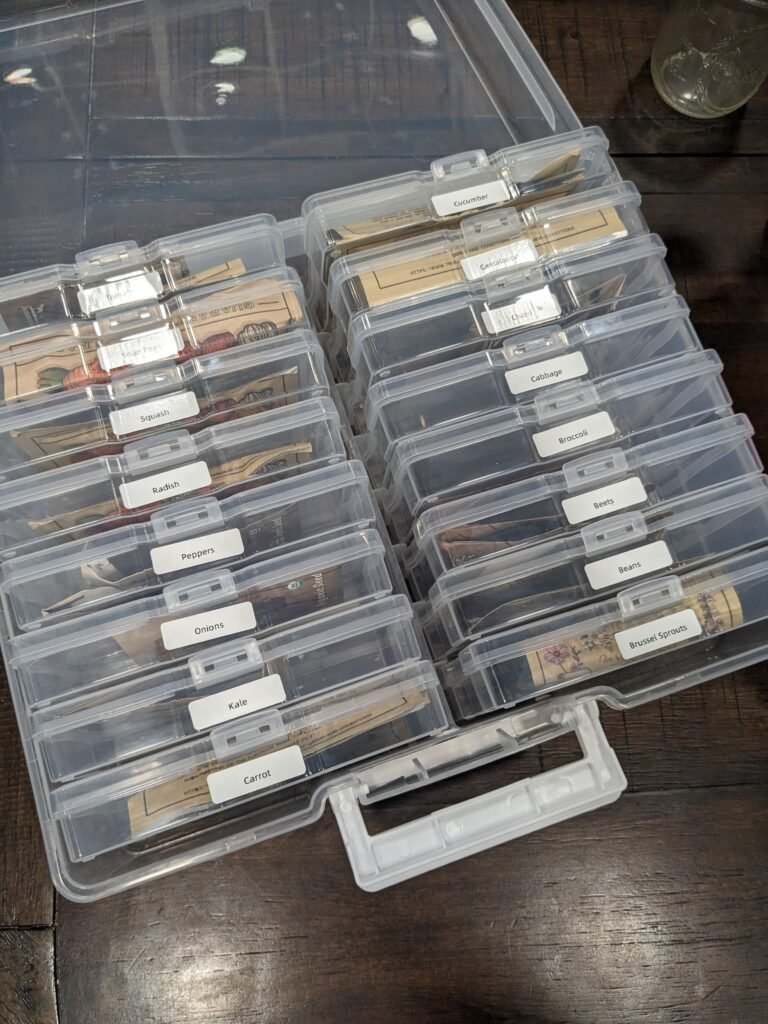
- A small storage box with dividers
- A photo case with labeled sections
- Envelopes or sleeves stored in a binder
The goal is to keep everything in one place and easy to access.
Step 4: Label Clearly
Clear labeling makes all the difference.
At a minimum, include:
- Plant name
- Variety
- Year
If you like keeping notes, you can also track things like how well a plant performed or when you planted it.
Step 5: Organize by Planting Time
One of the most helpful things you can do is sort your seeds by when they’ll be planted.
Instead of just grouping by type, organize them into:
- Early season
- Mid-season
- Late season
This way, when it’s time to plant, you’re not digging through everything—you’re just grabbing what you need for that moment.
Step 6: Store Them in the Right Place
Seeds last longest when they’re kept in a cool, dry, and dark environment.
Good places to store them include:
- Inside a cabinet
- A pantry shelf
- A drawer in your home
Try to avoid areas with big temperature swings or moisture, like garages or sheds.
Step 7: Keep a Simple Inventory
You don’t need anything fancy to keep track of your seeds.
A simple list—on paper or digitally—can help you:
- Know what you already have
- Plan your garden more efficiently
- Avoid overbuying
It’s a small habit that pays off every season.
A System That Grows With You
Your seed organization system doesn’t have to be perfect—it just needs to work for you.
Start simple, keep everything in one place, and adjust as your garden grows.
Over time, you’ll find what fits your routine best, and it will become second nature.
Final Thoughts
Taking the time to organize your seeds might seem small, but it sets the tone for your entire gardening season.
Instead of feeling scattered, you’ll feel prepared.
Instead of overwhelmed, you’ll feel excited.
And that’s exactly how it should feel when you’re getting ready to grow your own food.
A Little Extra Help
If you’re looking for a few simple tools to make seed organizing even easier, I’ve gathered some of the ones we personally like to use and keep on hand.
You can browse them here: Seed Storage & Garden Planning
Happy organizing,
Eliza