
Every fall, I have this lovely idea that once the garden starts winding down, life on the homestead will slow down right along with it.
Every fall, I’m reminded that it doesn’t quite work that way.
Sure, the temperatures are dropping, the leaves are changing, and most of the garden has called it quits for the season, but here I am, still preserving tomatoes and working my way through the last of our harvest.
In fact, as I’m writing this, I have tomatoes in both the freeze dryer and the dehydrator. All those green tomatoes I picked before our first freeze? They’re slowly ripening inside the house, which means my tomato-preserving days aren’t over just yet!
Meanwhile, I still have an entire raised bed full of beets and radishes that, believe it or not, are continuing to grow.
Apparently, nobody told them gardening season was supposed to be over.
Here in North Idaho, winter will be here before we know it. And while I’m looking forward to a break from gardening and preserving, there’s still some work to be done before we can officially put the garden to bed.
So today, I’m sharing what we’ve accomplished so far, what’s still on my to-do list, and a few things you can do to prepare your own garden for winter.
The Garden Is Slowly Winding Down
One of my favorite things about homesteading is watching the seasons change.
Spring is full of excitement as we start seeds indoors and begin dreaming about the garden. Summer is spent watering, weeding, harvesting, and trying to keep up with everything growing.
Then comes fall.
The mornings are crisp, the trees are absolutely beautiful, and the garden begins slowing down.
Although, apparently, my kitchen didn’t get the memo.
Between canning, dehydrating, and freeze-drying, fall is still a busy season around here. While I love filling our pantry shelves with homegrown food, I’ll admit that I’m looking forward to those winter days when I can finally put my feet up for a bit.
But first, the garden needs some attention.
1. Cleaning Out the Garden Beds
Our progress: Mostly done!
The biggest garden chore I’ve tackled so far is pulling out the plants that have finished producing.
Once our freezing temperatures arrived, it was time to say goodbye to most of the summer garden.
There’s always something a little bittersweet about pulling out plants that you’ve spent months caring for, but after a long growing season, it’s also nice to see the beds cleaned up.
Of course, I haven’t emptied everything.
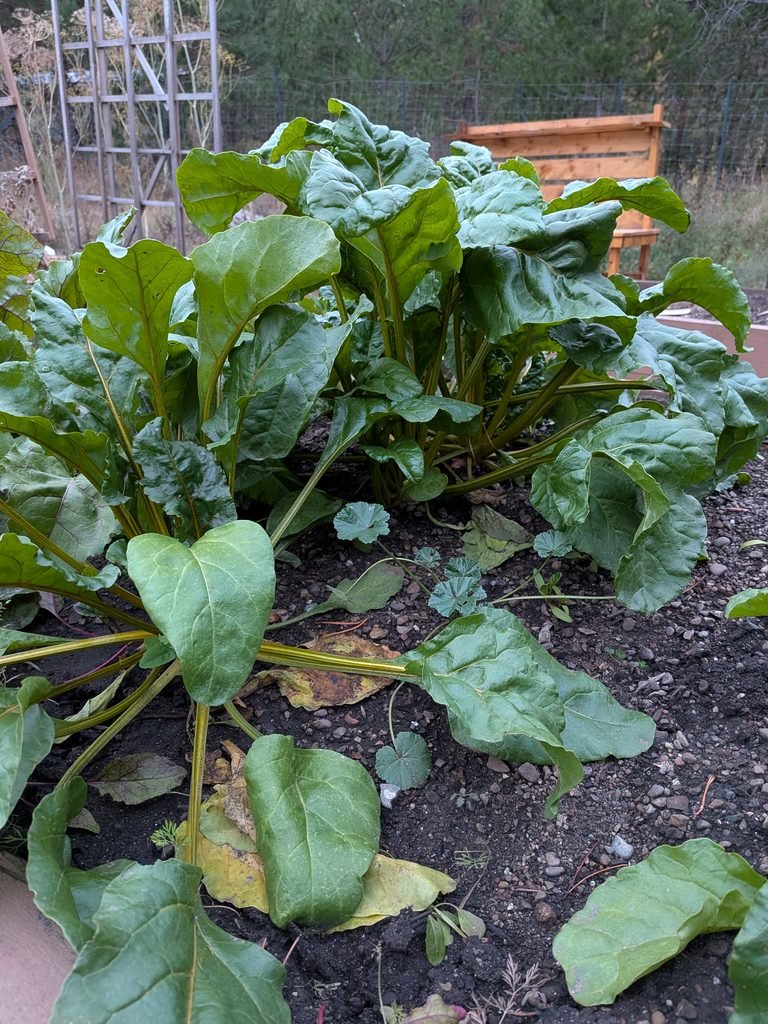
We still have one raised bed full of beets and radishes, and they’re continuing to grow despite the chilly temperatures. I’m letting them hang out a little longer while they’re still doing their thing.
If you’re cleaning out your own garden, here are a few things to keep in mind:
- Remove plants that have finished producing.
- Dispose of diseased plant material rather than adding it to a typical home compost pile.
- Pull weeds before they have the opportunity to spread more seeds.
- Consider leaving some healthy roots and selected plant stems in place to benefit soil organisms and overwintering insects.
Don’t feel like everything has to be finished in one afternoon. Gardening is a marathon, not a sprint. At least that’s what I keep telling myself!
2. Adding Compost to the Raised Beds
Our progress: Still on the to-do list.
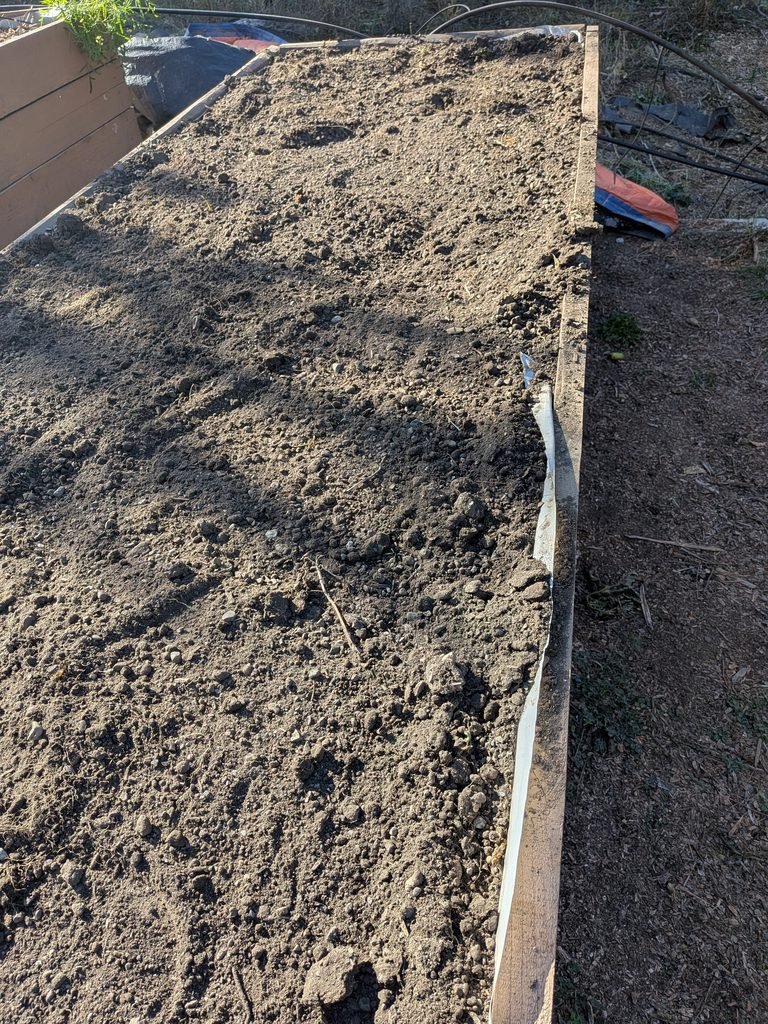
Our garden consists of 12-foot-by-4-foot raised beds that my husband milled the lumber for himself. Our boys helped build them, making them one of my favorite projects we’ve done together.
After a long growing season, the soil can benefit from a little extra attention.
One thing I’d like to do before winter is add finished compost to the beds.
Compost helps improve soil structure, adds organic matter, and supports beneficial organisms in the soil.
Fall is a great time to add it because the garden is mostly empty and you aren’t trying to work around a bunch of growing plants.
A layer of about 1–2 inches of finished compost is a reasonable starting point for many raised beds, although the amount your soil needs will vary.
There’s no need to dig everything up. Simply spreading the compost over the soil surface is a great option.
The goal is to take care of the soil now so it’s ready to support another growing season next spring.
3. Mulching the Garden Beds
Our progress: Garlic beds are done!
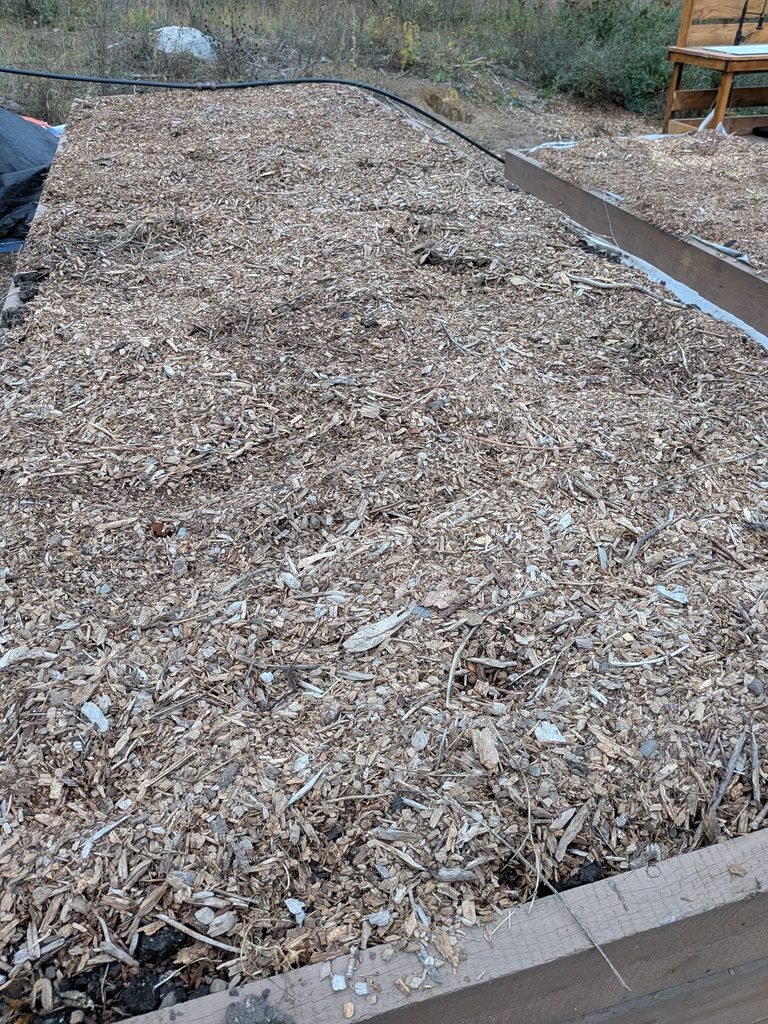
So far, the only beds I’ve mulched are the ones where I planted our fall garlic.
Every year, we plant hardneck garlic, and this year I ordered two pounds total: one pound of Music and one pound of Chesnok Red.
My husband makes mulch for us to use around the homestead, and we use it to cover the garlic after planting.
The mulch helps insulate the soil, moderate temperature changes, and protect the garlic through our cold North Idaho winters.
I’d still like to get some of our other garden beds covered before winter really sets in.
Leaving bare soil exposed to the elements can contribute to erosion and soil damage, so covering it with organic material is a simple way to protect it.
Some good mulch options include clean straw, shredded leaves, and suitable untreated wood chips.
If you’re using wood chips, it’s generally best to leave them on the soil surface rather than mixing fresh chips directly into the soil.
And if you haven’t planted your garlic yet, be sure to check out my post on how we plant ours!
Related Post: Planting Hardneck Garlic in the Fall
4. Protecting Those Last Cold-Weather Crops
Our progress: Still growing!
This is where things get a little interesting in our garden this year.
While most of our vegetables have finished producing, we still have a bed full of beets and radishes that are growing!
Both are cool-season vegetables that can tolerate some chilly weather, although a hard freeze can damage exposed roots and foliage.
I’m happy to let ours continue growing for now, but I’ll be keeping an eye on the temperatures.
If you’re growing fall vegetables, you can sometimes extend your harvest by using:
- Frost cloth or floating row covers
- Low tunnels or cold frames
- Mulch around root crops
- Careful monitoring of overnight temperatures
Just remember that cold tolerance depends on the variety, how established the plants are, and how severe the weather becomes.
Eventually, I’ll need to harvest the rest of our beets and radishes, but for now, I’m enjoying the fact that our garden isn’t quite finished providing for us.
5. Cleaning and Storing Garden Tools
Our progress: Still needs to be done.
I’ll be the first to admit that cleaning garden tools isn’t exactly my favorite fall activity.
By this point in the year, I’m usually ready to put everything away and forget about it until spring.
But taking a little time to clean and store tools properly can help them last longer.
Before winter, it’s a good idea to remove dirt from shovels, hoes, and hand tools, dry everything thoroughly, and lightly oil metal surfaces that are prone to rust.
It’s also a great time to gather up plant markers, garden clips, and any other little supplies that somehow ended up scattered around the garden.
Since we live in an area where winter brings plenty of snow, I definitely don’t want to be searching for forgotten tools beneath a snowbank come spring.
6. Taking Notes for Next Year’s Garden
Our progress: Always a work in progress!</italic>
Every gardening season teaches me something new.
Some things grow beautifully, some things struggle, and some things seem determined to grow whether I want them to or not.
Before winter settles in, I like to think about what worked and what I’d like to change next year.
Did we plant enough of our favorite vegetables? Did we grow too much of something? Are there varieties we’d like to try again?
I’m still figuring out exactly how much garlic we need to grow each year. We use a lot of it, and while I’d love to plant more, that also means giving up more space in our raised beds.
It’s always a balancing act!
Winter is the perfect time to make those decisions, look through seed catalogs, and start planning for spring.
Here in our part of North Idaho, we generally wait until after Mother’s Day to plant our warm-season vegetables outside, so there’s plenty of time to dream about next year’s garden.
And probably order more seeds than necessary.
But we won’t talk about that.
7. Finishing Up the Harvest Preservation
Now, I realize this isn’t technically part of preparing the garden beds for winter, but around here, it certainly feels like part of wrapping up gardening season.
Just because the plants are finished growing doesn’t mean the work is finished!
I’m still preserving tomatoes from our garden, and I’m so thankful for the ability to freeze-dry and dehydrate them.
Right now, I have tomatoes going in both machines, and there’s still more to come as the green tomatoes I brought inside continue to ripen.
It’s a wonderful problem to have, even if it means my kitchen stays busy a little longer than I’d planned.
I love knowing that the food we grew during those warm summer months will continue feeding our family throughout the winter.
Whether it’s jars of home-canned food, bags of freeze-dried vegetables, or dehydrated ingredients tucked away in the pantry, all that work is worth it.
But I won’t pretend I’m not looking forward to the day when the last batch is finished!
8. Finally Letting the Garden Rest
Eventually, the remaining vegetables will be harvested, the last garden beds will be covered, and the tools will be tucked away for winter.
And when that day comes, I’ll be ready.
I love gardening. I love growing food for our family, watching things flourish, and seeing the fruits of our labor fill the pantry shelves.
But I also appreciate the rest that winter brings.
Homesteading has a way of keeping us busy through every season, and I’ve learned that rest is just as important as the work.
There’s a time to plant, a time to harvest, and a time to simply enjoy what we’ve been blessed with.
“To every thing there is a season, and a time to every purpose under the heaven.” — Ecclesiastes 3:1 (KJV)
And after months of gardening and preserving, I’m looking forward to that quieter season.
Of course, give me a couple of months and I’ll probably be itching to pull out my seed collection and start all over again!
A Garden Winter Prep Checklist
If you’re getting ready to put your own garden to bed, here’s a simple checklist to help you get started.
- Remove spent and diseased plants.
- Pull weeds and clean up garden debris.
- Harvest remaining vegetables before damaging freezes.
- Add finished compost where needed.
- Mulch or otherwise cover exposed soil.
- Plant and mulch fall garlic.
- Clean and store garden tools and supplies.
- Inspect raised beds for repairs.
- Make notes about this year’s successes and struggles.
- Start dreaming about next year’s garden!
Looking Forward to a Slower Season
Our garden isn’t completely put to bed just yet, and that’s okay.
There are still beets and radishes growing, tomatoes ripening on the counter, and plenty of preserving happening in the kitchen.
But we’re getting there.
Soon enough, the garden beds will be covered in snow, the pantry shelves will be stocked, and I’ll have a little more time to enjoy the slower pace of winter.
Until then, I’ll be over here checking on my tomatoes and crossing a few more things off my garden checklist.
How about you? Have you put your garden to bed for winter, or are you still harvesting a few things? I’d love to hear what you’re growing!
Happy homesteading!
From our homestead to yours,
Eliza