
This post contains affiliate links. I may earn a small commission at no extra cost to you. Thanks for supporting Patriot Street Homestead!
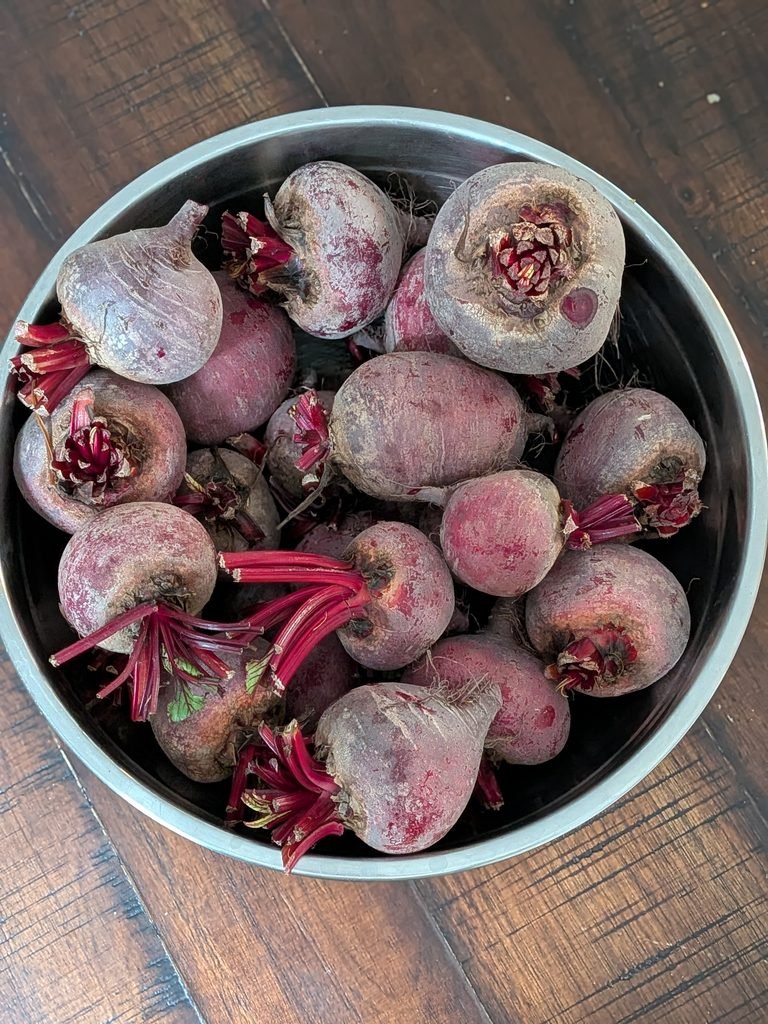
When 30 pounds of beets show up at your house, you know you’re going to be spending some quality time in the kitchen.
I recently purchased 30 pounds of beets through our local co-op, and I’ve slowly been working my way through the pile. Whenever we buy produce in bulk, we usually have to figure out several ways to preserve it, and these beets are no exception.
If you’ve been around here for any amount of time, you probably already know that my family loves pickles. Cucumbers, radishes, peppers…if I can put it in vinegar, chances are someone in this house will eat it.
So naturally, quite a few of these beets became pickled beets.
Stocking the Pantry With Pickled Beets
Pickled beets are so handy to have sitting on the pantry shelf. We love adding them to salads, but they’re just as likely to disappear straight out of the jar.
Sweet, tangy, earthy and a little salty: they’re one of those simple pantry foods that don’t need much fuss.
With 30 pounds to work through, I canned enough that we should be enjoying pickled beets for quite a while.
At least that’s the plan. Sometimes saying something will last “all year” is usually a good way to guarantee we’ll eat it by February.
Water bath canner, canning tools, jar lifter, or canning jars
Water-Bath Canned Pickled Beets
Materials
- 7 pounds beets about 2–2½ inches in diameter
- 4 cups 5% acidity vinegar
- 2 cups sugar
- 2 cups water
- 1½ teaspoons canning or pickling salt
- 2 cinnamon sticks
- 12 whole cloves
Instructions
Prepare your canner and jars
- Wash your canning jars and keep them hot while you prepare the beets. Prepare your boiling-water canner according to the manufacturer’s instructions.
Cook the beets
- Trim the beet tops, leaving about 1 inch of stem and the roots attached. Wash the beets thoroughly.
- Place them in a large pot, cover with boiling water and cook until tender, usually about 25–30 minutes depending on their size.
- Drain the beets and allow them to cool just enough to handle. Trim off the roots and remaining stems, then slip off the skins.
Slice the beets
- Small beets can be left whole. Cut larger beets into approximately ¼-inch slices or cubes, depending on how you like them.
Make the pickling brine
- In a large pot, combine the vinegar, sugar, water and pickling salt.
- Place the cinnamon sticks and whole cloves in a spice bag or tied piece of cheesecloth and add them to the brine.
- Bring the mixture to a boil. Add the prepared beets and simmer for about 5 minutes. Remove the spice bag.
Fill your jars
- Pack the hot beets into hot canning jars, leaving **½-inch headspace**.
- Ladle the hot pickling liquid over the beets, maintaining ½-inch headspace.
- Remove air bubbles and adjust the headspace if necessary. Wipe the jar rims clean and apply the lids and bands.
Water-bath can the beets
- Place the jars in your boiling-water canner and process according to your elevation:**0–1,000 feet:** 30 minutes**1,001–3,000 feet:** 30 minutes**3,001–6,000 feet:** 35 minutes**Above 6,000 feet:** 40 minutesThese processing times apply to both **pints and quarts**.
- Once processing is complete, turn off the heat, remove the canner lid and wait about 5 minutes before removing the jars. Place them on a towel or cooling rack and leave them undisturbed for 12–24 hours.
- Check the seals, label your jars and store them in a cool, dark place.
Notes
Turning Some Into Beet Chips
Not all 30 pounds are going into jars.
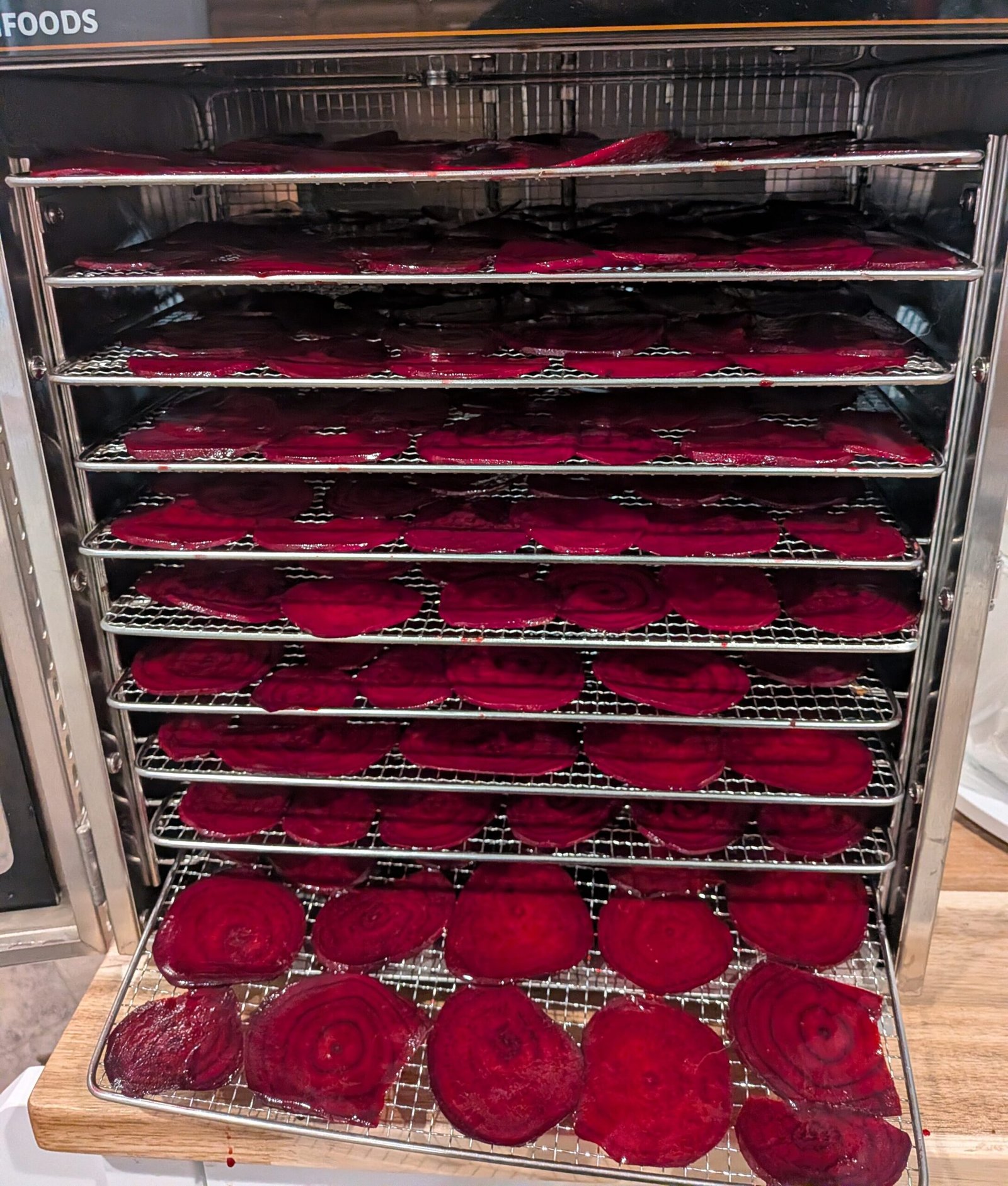
I also sliced quite a few of the beets thinly to make dehydrated beet chips. I kept these incredibly simple with just a little olive oil and salt before putting them into the dehydrator.
A mandoline or vegetable slicer makes this job much easier because getting the slices relatively even helps them dry more consistently.
Arrange the beet slices in a single layer on your dehydrator trays and dehydrate until completely dry and crisp. I am running mine at 135 degrees for about 12 hours, but I’ll be keeping an eye on them. Drying time can vary quite a bit depending on the thickness of your slices, your dehydrator, and the moisture content of the beets, so I prefer to go by texture rather than the clock.
They’re an easy little snack and another way to use up a big batch without filling every available shelf in the pantry with jars.
Although I have to admit, I’m not exactly opposed to shelves full of jars.
Freeze-Drying Beets for Beet Powder
And because apparently canning and dehydrating weren’t enough projects for one pile of beets, the freeze dryer is running too.
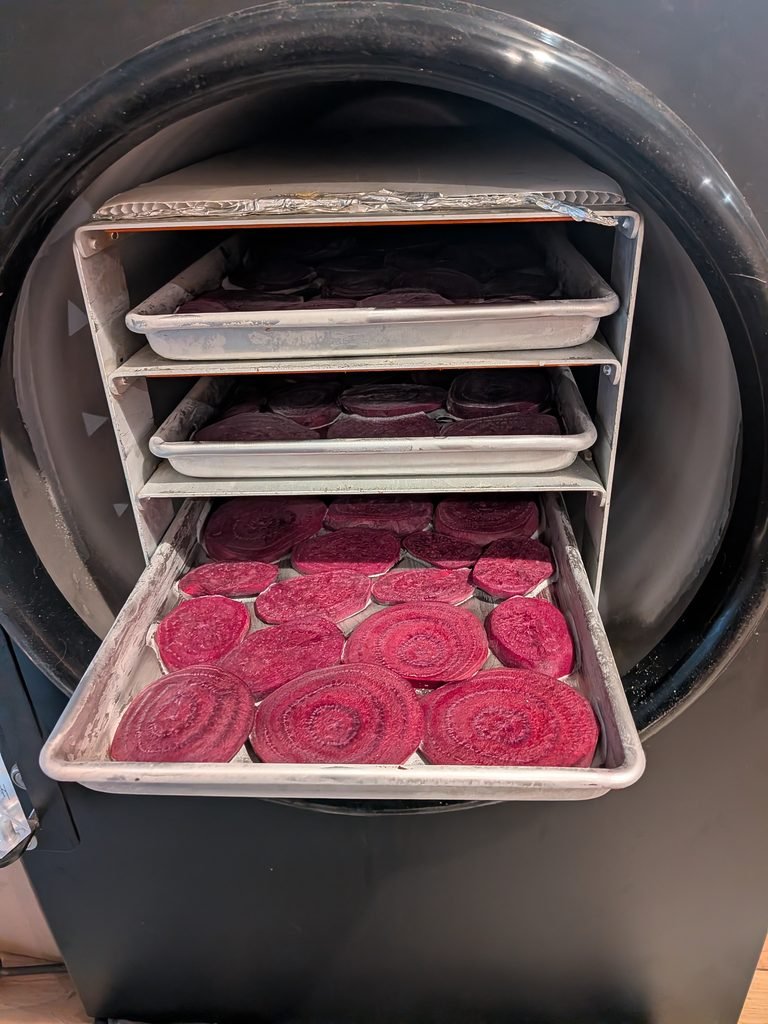
I sliced another portion of the beets and loaded them onto my freeze-dryer trays. Once they’re completely freeze-dried, I’ll put them into a blender or food processor and grind them into a fine beet powder.
The powder will be stored in an airtight container and used throughout the year, especially in smoothies. Instead of having whole beets taking up freezer space, I’ll be able to scoop out a little powder whenever I want it.
That’s one of my favorite things about freeze-drying food. A surprising amount of produce can fit into a relatively small jar once it’s completely dry and powdered.
One Vegetable, Three Ways
Buying produce in bulk from our co-op gives me the opportunity to stock up when something is available and then figure out how we’ll actually use it throughout the year.
With this 30-pound batch, we’re ending up with:
- Pickled beets for salads and eating straight from the jar
- Dehydrated beet chips for snacking
- Freeze-dried beet powder for smoothies
And I’m still working through the beets.
Thirty pounds didn’t seem quite so intimidating when I ordered them.
It looked a little different once they were sitting in my kitchen.
Little by little, they’re making their way into jars, dehydrator trays and freeze-dryer trays, and eventually they’ll all be tucked away for the months ahead.
I love preserving food. A big pile of produce and a messy kitchen today means shelves full of food we can enjoy long after beet season is over.
Now, if you’ll excuse me, I still have beets to process…and I’m pretty sure my hands are going to be pink for the foreseeable future.
From our kitchen to yours,
Eliza