
This post may contain affiliate links, which means I may earn a small commission at no extra cost to you. Thank you for supporting Patriot Street Homestead.
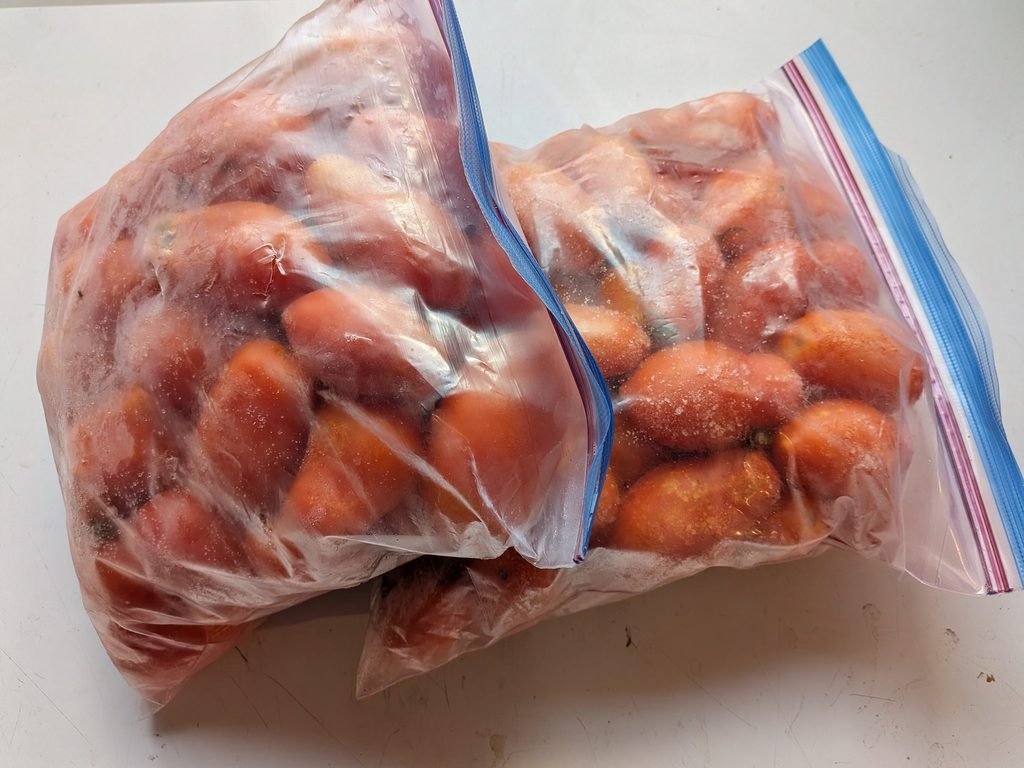
Last summer, when the Roma tomatoes were coming out of the garden faster than I could keep up with them, I did what I often do during the busiest part of harvest season: I tossed them in the freezer to deal with later.
Well, “later” finally arrived. Nothing says Labor Day weekend quite like giving yourself more labor in the kitchen!
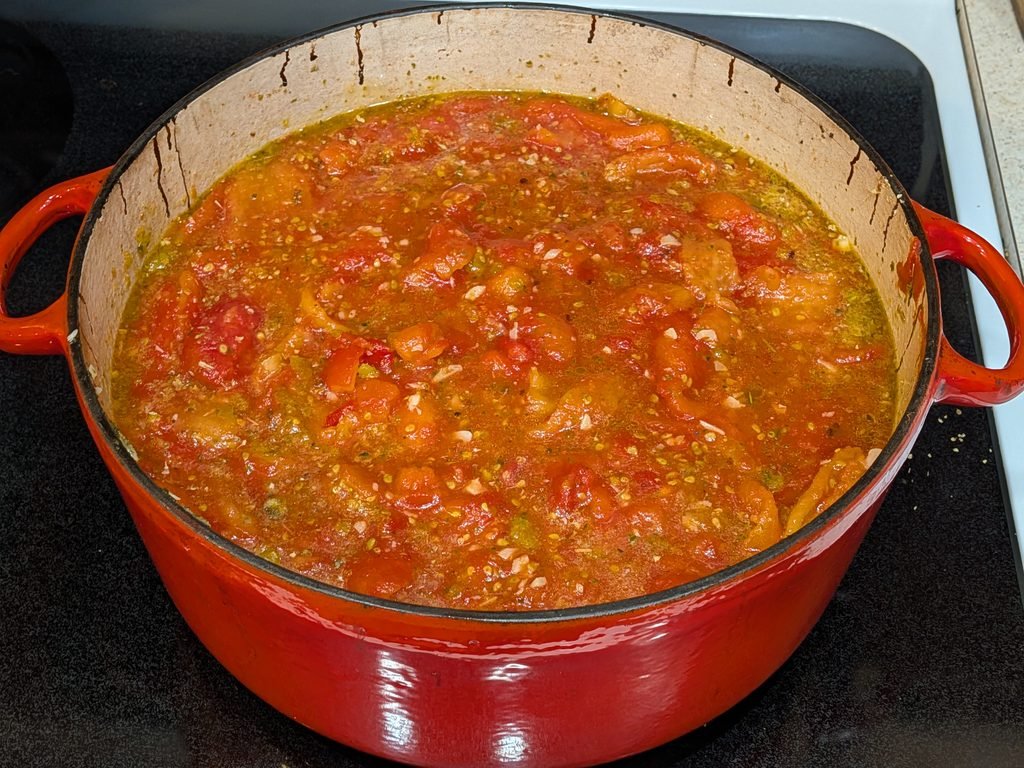
I pulled those tomatoes from last year out of the freezer, thawed them, and turned them into a big batch of homemade pasta sauce. Rather than canning the finished sauce, I decided to freeze-dry it so we can easily use it throughout the year.
And, of course, I added plenty of garlic. Probably more than most recipes call for because, really, who doesn’t love garlic?
Why I Love Freeze-Drying Pasta Sauce
I love having jars of canned pasta sauce in the pantry, but freeze-dried sauce is another really convenient option for us.
Once it’s completely freeze-dried, the sauce is lightweight and takes up much less storage space. Even better, I can use exactly as much as I need.
Making spaghetti for the whole family? Rehydrate enough for a big pot.
Need a little sauce for one serving of pasta or a quick lunch? Scoop out a small amount and add water.
I don’t have to open an entire jar just to use a few spoonfuls. It’s one of those little conveniences that makes all the work during garden season worth it later.
Homemade Roma Tomato Pasta Sauce
This recipe is very forgiving, which is exactly how I like garden recipes to be. You can adjust the seasonings, garlic, and consistency according to what your family likes and how many tomatoes you have.
Ingredients
- About 12 pounds Roma tomatoes, fresh or previously frozen and thawed
- 1 cup butter (or extra virgin olive oil – or 50/50)
- 2 medium onions, diced
- 24 cloves garlic, minced (always feel free to use more!)
- 1 cup tomato paste
- 2 Tablespoon dried basil
- 2 teaspoons dried oregano
- 4 teaspoons salt, or to taste
- 2 teaspoon black pepper
- 1 teaspoon red pepper flakes, optional
Instructions
If you’re using frozen tomatoes like I did, allow them to thaw completely. Freezing actually makes the skins incredibly easy to remove after thawing. Peel away the skins and drain off some of the excess liquid if your tomatoes are especially watery.
In a large stockpot, heat the butter over medium heat. Add the diced onions and cook until softened.
Add the garlic and cook for another minute or two, just until fragrant. And if 24 cloves of garlic somehow turns into more, I certainly won’t judge.
Add the tomatoes, tomato paste, basil, oregano, thyme, salt, pepper, and red pepper flakes if using.
Bring everything to a gentle simmer and cook uncovered for about 1–2 hours, stirring occasionally. The longer it simmers, the thicker and richer the sauce will become.
Once the tomatoes have cooked down, use an immersion blender to blend the sauce until it reaches your preferred consistency. We like ours fairly smooth, but you can absolutely leave it a little chunky.
Taste and adjust the seasonings. If your tomatoes are particularly acidic, you can add a little sugar at a time until the flavor is where you want it.
At this point, your sauce is ready to eat, freeze, or—as I did—freeze-dry!
My Trick for Freeze-Drying Tomato Sauce
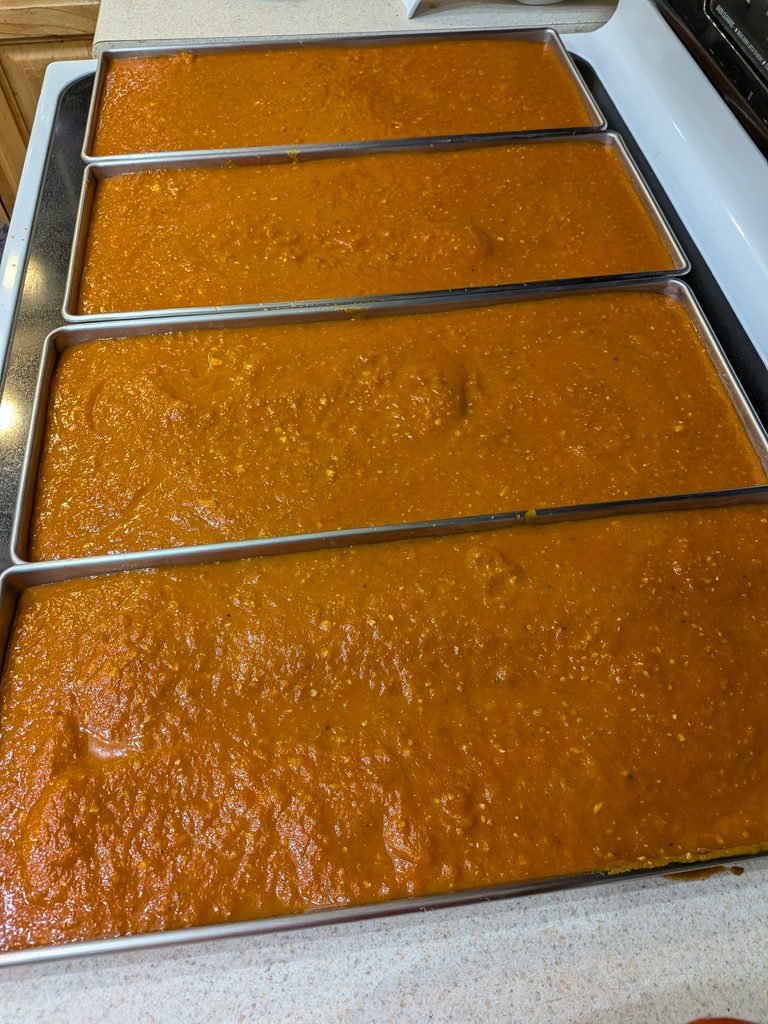
Before putting the sauce into my Harvest Right freeze dryer, I like to freeze it directly in my freeze dryer trays first.
Once the sauce has cooled, I pour it evenly into the trays and place them in my regular freezer until completely solid. Then I transfer the frozen trays straight into the Harvest Right.
Pre-freezing the sauce helps cut down on the amount of time it needs to spend in the freeze dryer. With how much food is coming out of the garden this time of year, anything that gets the next batch into the freeze dryer a little faster is a win in my book.
Cycle times can vary depending on the depth of your sauce and your particular freeze dryer. I always check the thickest portions before removing the trays to make sure there are no cold, soft, or gummy spots remaining. If necessary, I simply add additional dry time.
Storing Freeze-Dried Pasta Sauce
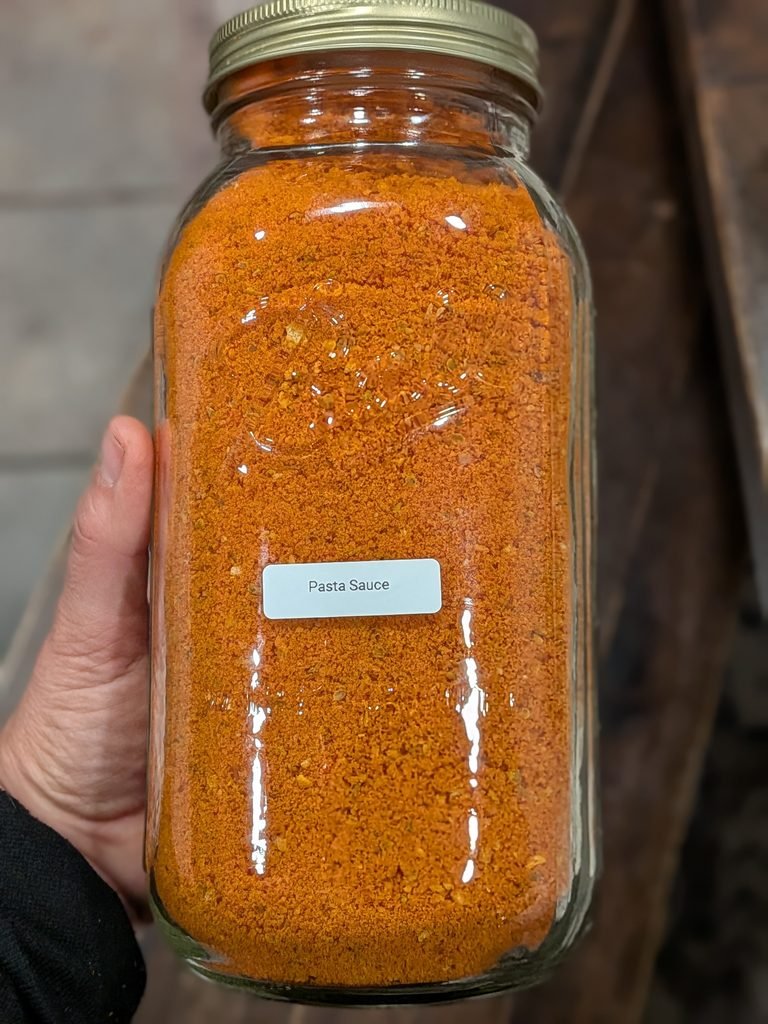
Once the sauce is completely dry, you can break it into pieces or crush it into flakes or powder.
Immediately package it in airtight containers appropriate for freeze-dried food. For long-term storage, I prefer Mylar bags with oxygen absorbers. For sauce we’ll use more frequently, mason jars with a good airtight seal are another convenient option.
My Favorite Freeze-Dryer Storage Supplies
Don’t forget to label everything with the contents and date. Six months from now, that mystery bag of red powder might not be nearly as obvious as it seems today!
How to Rehydrate Freeze-Dried Pasta Sauce
This is where freeze-drying the sauce becomes so convenient.
Put however much sauce you need into a bowl or saucepan and gradually add warm or hot water, stirring as you go.
I don’t use an exact water-to-sauce ratio because the amount needed can vary depending on how thick the sauce was before freeze-drying and whether you’ve stored it in chunks, flakes, or powder.
Start with less water than you think you’ll need. Stir, let it sit for a few minutes, and continue adding water until the sauce reaches the consistency you like.
For a single serving, I can rehydrate just a small amount. For family spaghetti night, I can make enough for the entire pot.
That’s probably my favorite part about preserving pasta sauce this way. I can make exactly as much as we need without opening an entire jar.
Freezing Tomatoes Gives Me a Little Breathing Room
One thing I’ve learned after years of gardening and preserving food is that I don’t have to deal with everything the minute it comes out of the garden.
Sometimes the tomatoes are ready at the same time as the cucumbers, peppers, onions, and everything else, and there are only so many hours in the day.
Freezing my Roma tomatoes last year allowed me to put them aside until I actually had the time to turn them into something. Now those tomatoes have finally become homemade pasta sauce, and the freeze dryer has given them an entirely new place in our pantry.
Next time we need pasta sauce, all I’ll have to do is scoop out what we need, add some water, and dinner is one step closer to being done.
And judging by the amount of garlic I put in it, we should also be safe from vampires for the foreseeable future.
From my kitchen to yours,
Eliza