This post may contain Amazon affiliate links. If you choose to purchase through them, it helps support our family’s homestead at no extra cost to you. Thank you for supporting what we do!
There’s something quietly comforting about planning a garden while winter is still holding tight. Outside, the ground is frozen and tucked under a blanket of snow. The beds are resting. The tools are hung up. And inside, with a warm drink nearby and seed catalogs spread across the table, hope quietly starts to grow again.
Winter might look like a pause on the homestead, but for the garden, it’s really just the beginning.
Why Winter Is the Best Time to Plan
When the snow is falling outside, there’s no pressure to rush. No weeds calling your name. No seedlings begging for attention. Winter gives us the gift of space—time to think clearly about what worked, what didn’t, and what we want to do differently next year.
Planning now means fewer impulse decisions later and a garden that feels intentional instead of overwhelming.
Looking Back Before Looking Ahead
Before I even open a seed catalog, I like to reflect on last year’s garden:
- What produced abundantly?
- What struggled or failed altogether?
- What did our family actually enjoy eating?
- What felt like more work than it was worth?
Winter is honest that way. With distance from the growing season, it’s easier to make thoughtful choices instead of emotional ones.
Dreaming With Seed Catalogs and Coffee (Or Tea)
There’s a certain magic to flipping through seed catalogs while the world outside is quiet and white. Tomatoes that promise summer warmth. Greens that feel impossibly fresh this time of year. Flowers that will eventually bring pollinators back to life.
This is where practicality meets dreaming. I mark the staples we rely on, circle a few new varieties to try, and remind myself that not every square inch needs to be planted for the garden to be successful.
Planning for Our Real Life
Winter planning is also when I consider our actual rhythms—not the ideal version of them.
- How much time will I realistically have?
- Will this be a busy year or a slower one?
- Do we need more storage crops or quick harvests?
A garden should serve your family, not the other way around. Planning during winter helps keep expectations grounded and realistic.
Creating a Simple Garden Plan
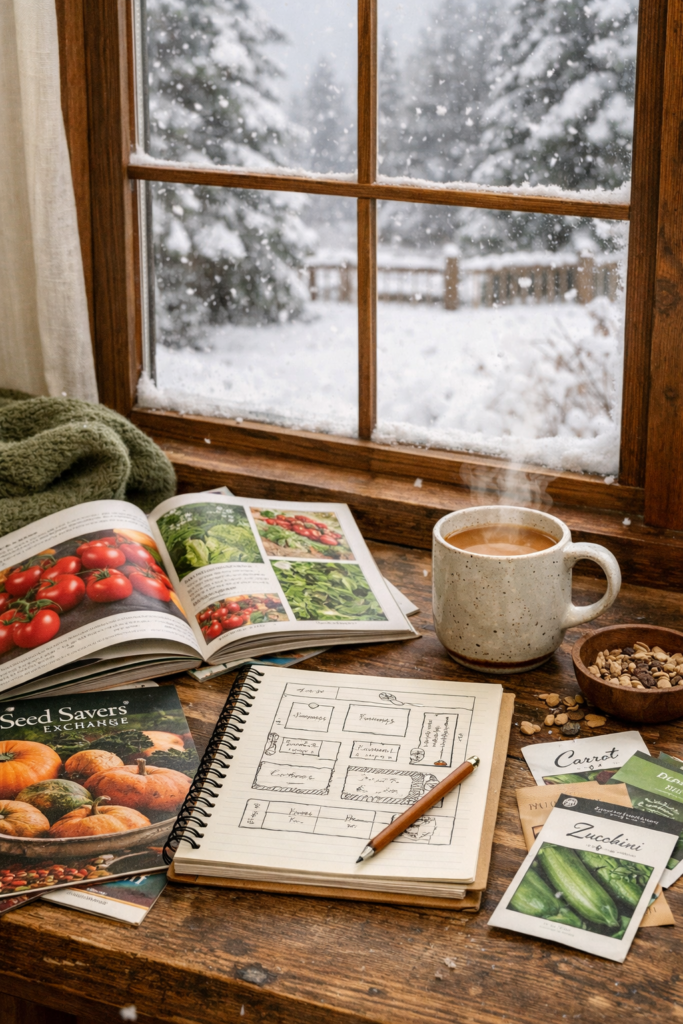
With the snow still falling, I sketch out where things will go, rotate crops on paper, and make notes about spacing and succession planting. It’s calm. It’s unrushed. And it feels good knowing that when spring finally arrives, the hard thinking has already been done.
Letting Winter Teach Us Patience
There’s something fitting about planning new growth while the land is resting. Winter reminds us that growth doesn’t always look active. Sometimes it looks like waiting. Sometimes it looks like preparation. And sometimes it looks like trusting that what’s planted—on paper now—will bloom in its own time.
When the snow melts and the soil warms again, the garden will be ready. And so will we.
Bonus Tip: How I Store Seeds in the Winter
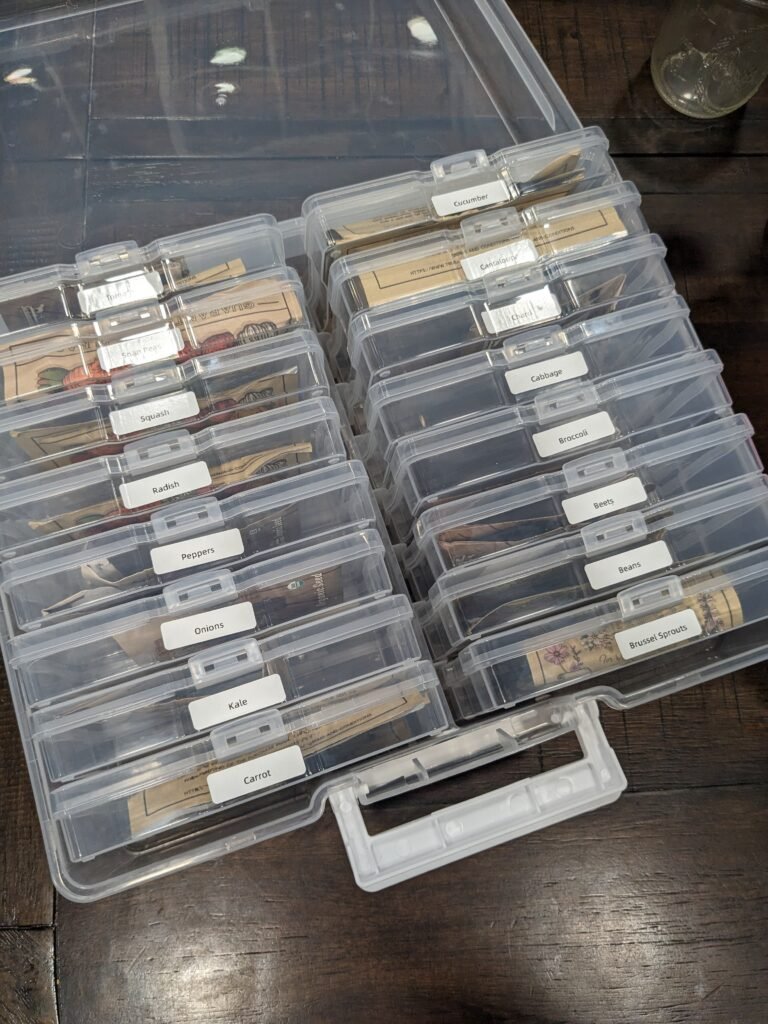
Since winter is also when I’m sorting and planning, it’s the perfect time to get seeds organized. I store ours in plastic photo boxes, which keeps everything tidy, dry, and easy to flip through when spring planning starts. Each box holds labeled seed packets by category, and because they’re compact and stackable, they tuck neatly away in a cool, dark spot. It’s a simple system, but it saves so much time—and makes dreaming up next year’s garden feel even more satisfying.