
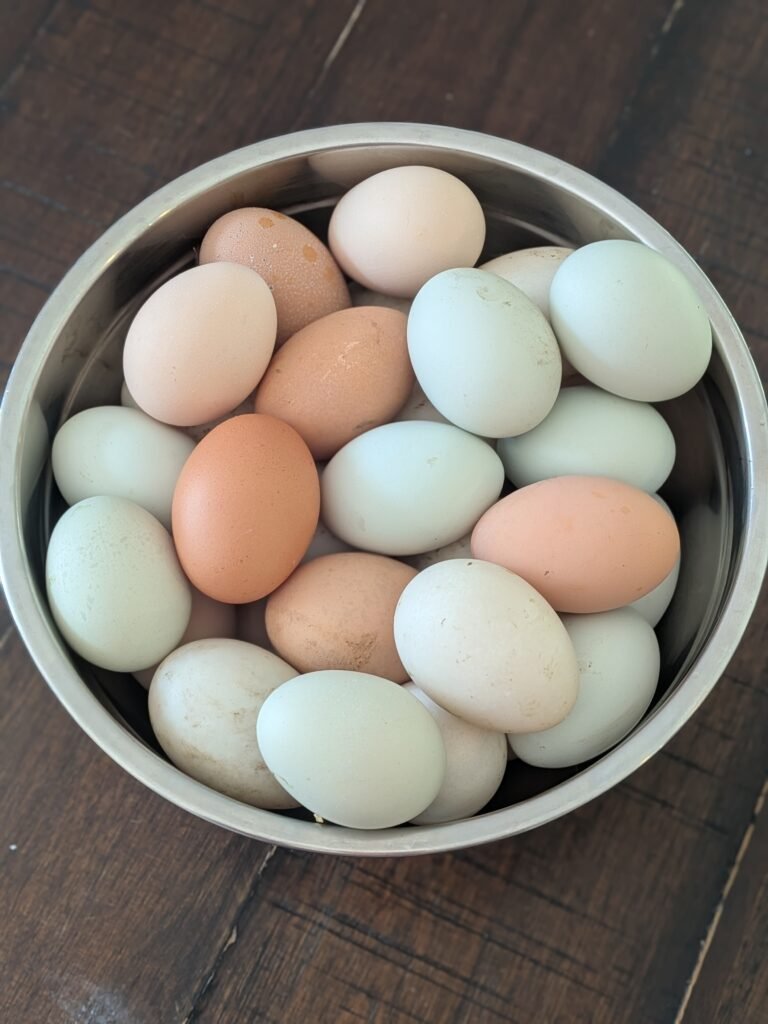
There’s something so satisfying about walking out to the coop and gathering more eggs than you know what to do with. Lately, that’s been our reality. We have an abundance of fresh eggs from our girls, and frankly, I’m tired of watching them pile up on our counter.
Instead of letting any go to waste, I decided to freeze-dry them. Freeze drying has quickly become one of our favorite ways to preserve our extra eggs.
Why We Freeze Dry Eggs
When the chickens are laying like crazy, it’s the perfect time to think ahead. Egg production isn’t always consistent, especially as seasons change. Having a shelf-stable supply of eggs gives us peace of mind when laying slows down.
We mostly use our freeze dried eggs for:
- Baking (you’d never know the difference)
- Quick breakfasts
- Those times when the girls decide to take a break from laying
It’s one of those simple homestead systems that just makes life easier.
The Freeze Dryer We Use
Freeze drying at home has been such a game changer for us, especially during seasons of abundance like this.
We’ve been using our Harvest Right Freeze Dryer for several years, and have absolutely loved it!
How We Freeze Dry Eggs
The process is surprisingly simple, but there are a few important steps to get it right!
1. Start with Fresh Eggs
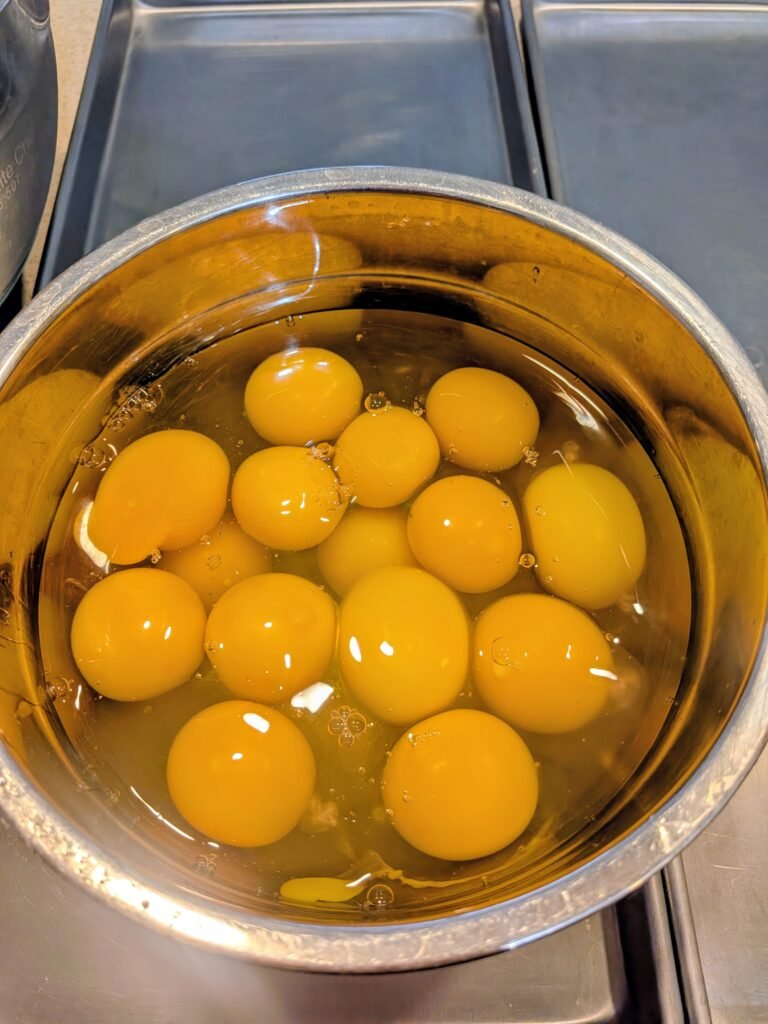
We gather our eggs and crack them into a large bowl.
2. Whisk Thoroughly
Before freeze-drying, the eggs need to be fully whisked. This combines the yolks and whites so they dry evenly and rehydrate better later.
3. Fill the Trays
Now, a normal person would probably slide the empty trays into the freeze dryer first and then carefully pour the whisked eggs into each tray while they’re already in place.
That is not what I do.
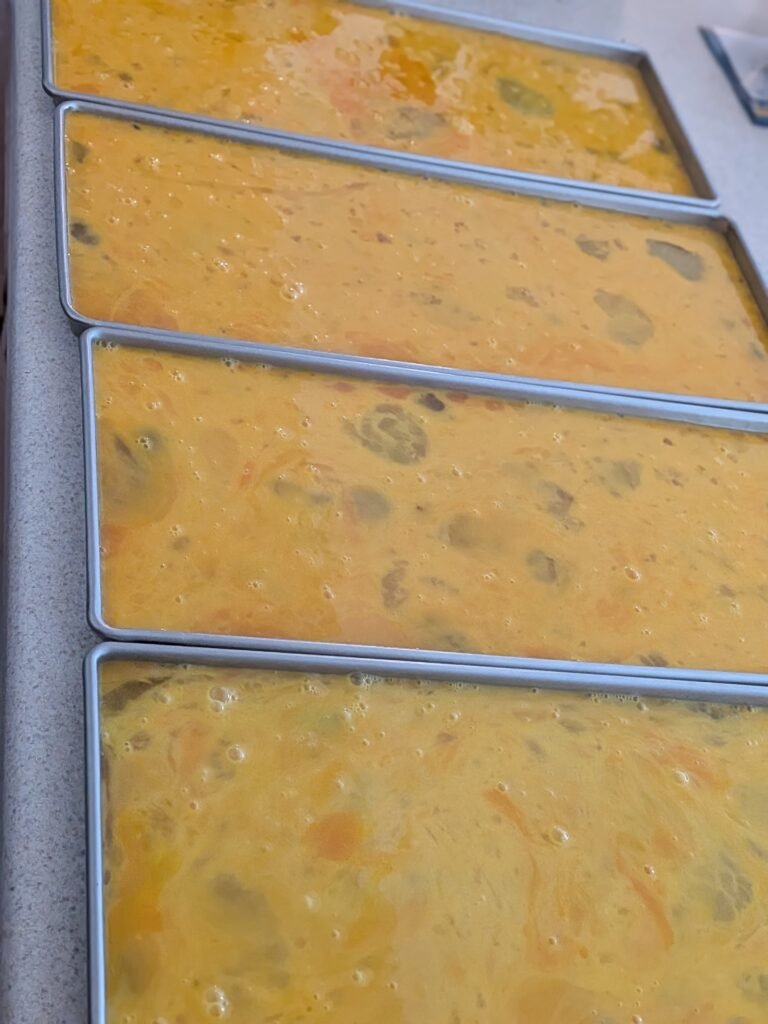
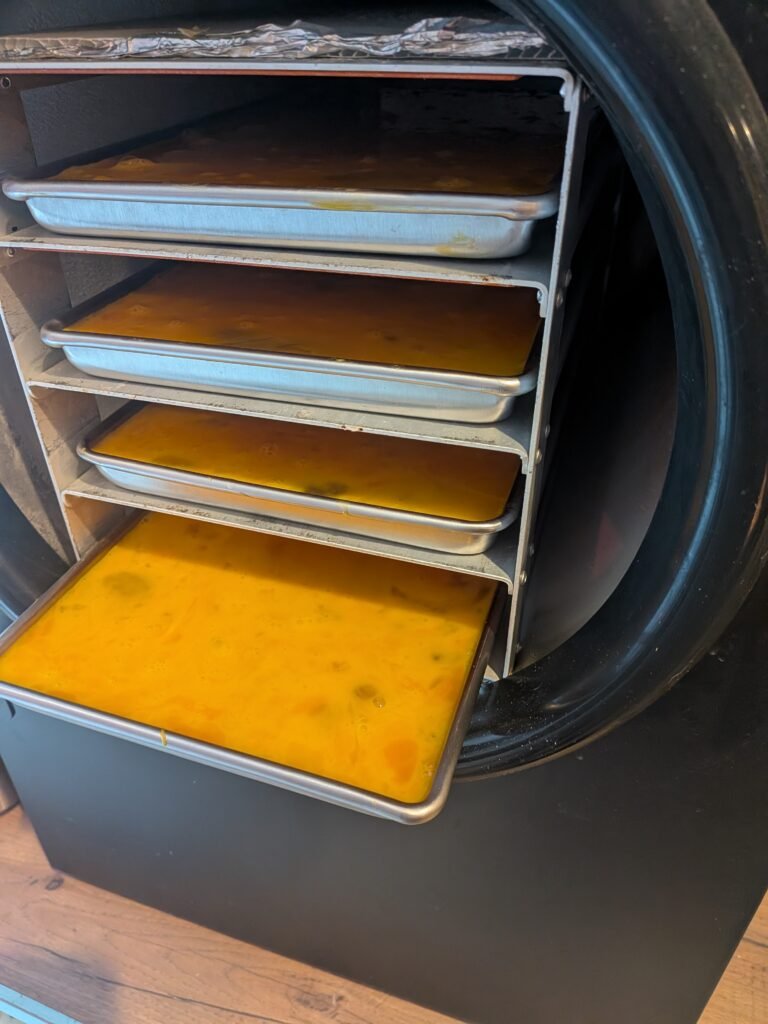
Instead, I like to live a little dangerously and pour all the whisked eggs into the trays on the counter ahead of time, then very carefully carry each full tray to the freeze dryer, trying not to spill a single drop along the way.
It turns into a slow, steady walk across the kitchen, holding my breath like it’s some kind of homesteading balance challenge. So far, I’ve managed to make it work, but I’ll admit, the “normal way” might be a bit less stressful.
For reference, I have 4 trays and can fit about 16 eggs on each—so 64 eggs per batch.
4. Freeze Dry
Once the trays are loaded (however you choose to do it!), they go into the freeze dryer until the eggs are completely dry and crumbly. This typically takes 20-48 hours, but it really depends on how many eggs you fit per tray. As always, pre-freezing will speed up the process.
5. Powder and Store
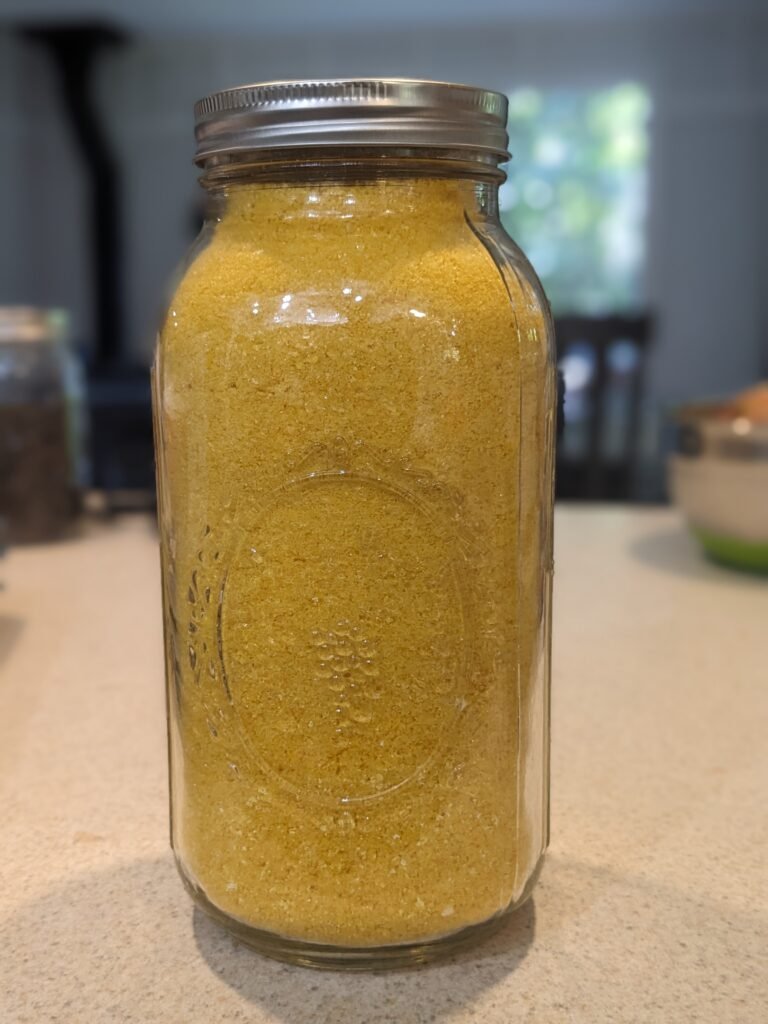
After they’re done, I break them up and blend them into a fine powder. All 64 eggs fit perfectly into a half-gallon mason jar, which we keep right on the shelf for easy access.
It’s hard to believe that many eggs can fit into one jar!
How To Store Freeze Dried Eggs
Proper storage is key to keeping them fresh long-term. We store ours:
- In a sealed half-gallon mason jar
- In a cool, dry place
- With an oxygen absorber (optional, but recommended for long-term storage)
When stored properly, freeze dried eggs can last for years, making them a great addition to any pantry.
How To Rehydrate Freeze Dried Eggs
Using your freeze dried eggs is just as simple as making them.
To rehydrate:
- Mix 2 tablespoons of egg powder with 2 tablespoons of water (this equals about 1 egg)
- Stir well and let it sit for a minute to fully absorb
From there, you can use them just like fresh eggs.
They work beautifully in:
- Cakes and cookies
- Pancakes and waffles
- Scrambled eggs (in a pinch!)
We honestly can’t tell the difference, and that’s saying something.
A Simple Way To Preserve The Harvest
Freeze drying eggs has been such a practical way for us to make the most of what our homestead provides. Instead of scrambling (literally) to use up dozens of eggs, we can preserve them for the slower seasons.
It’s one of those small systems that brings a lot of comfort knowing that even when the coop quiets down, we’ll still have eggs ready whenever we need them.
Have you ever tried preserving eggs this way? And be honest—are you doing it the easy way, or carefully walking trays across the kitchen like me? I’d love to hear!
From our homestead to yours,
Eliza