This post may contain Amazon affiliate links. If you choose to purchase through them, it helps support our family’s homestead at no extra cost to you. Thank you for supporting what we do!
One of the biggest lessons we’ve learned on our homestead is that timing matters just as much as what you plant. Starting seeds too early leaves you with leggy plants and no place to put them. Starting too late shortens your harvest window.
So instead of guessing each year, we follow a simple seed-starting rhythm that works well for our Zone 6a growing season.
(If you missed what we’re actually growing this year, you can read our full garden plan here → “What We’re Planting”.)
Understanding Zone 6a’s Growing Window
In Zone 6a, our average last frost date falls around mid-to-late April. Of course, every year is a little different, but this gives us a reliable planning anchor.
Rather than focusing on calendar dates alone, we count backward from that last frost date to decide when to start seeds indoors.
This keeps us from rushing the season—or falling behind.
If you want a really wonderful guide to keep you on track, I highly recommend the Vegetable Gardener’s Handbook. I use it every year!
Our Seed Starting Schedule (Zone 6a)
10–12 Weeks Before Last Frost
(Late January – Early February)
This is when we start the slow growers.
- Onions
- Herbs like thyme and oregano
These crops take patience, but starting them early gives them the strong root systems they need before heading outside.
8–10 Weeks Before Last Frost
(Mid–Late February)
Now we begin some of our main garden staples.
- Peppers
- Celery
- Parsley
Peppers especially need extra time to get established, so this early start is worth it.
6–8 Weeks Before Last Frost
(Early–Mid March)
This is when things start to feel like spring is coming.
- Tomatoes
- Brassicas (broccoli, cabbage, cauliflower)
- Lettuce for transplanting
This is one of our busiest seed-starting windows, but also the most exciting—suddenly the grow shelves are full again.
3–4 Weeks Before Last Frost
(Early April)
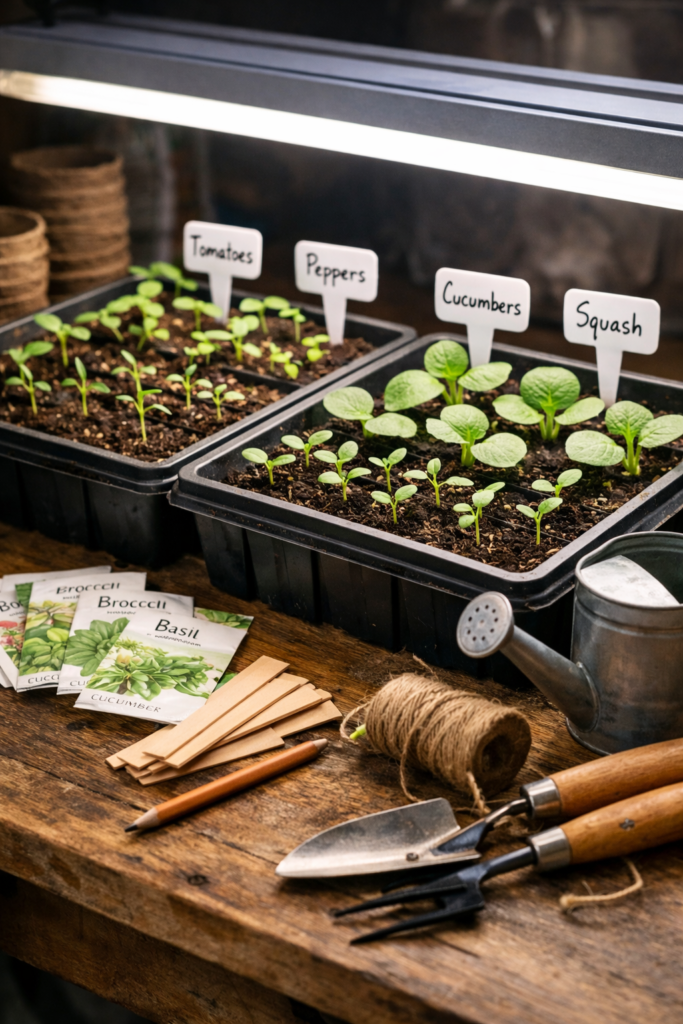
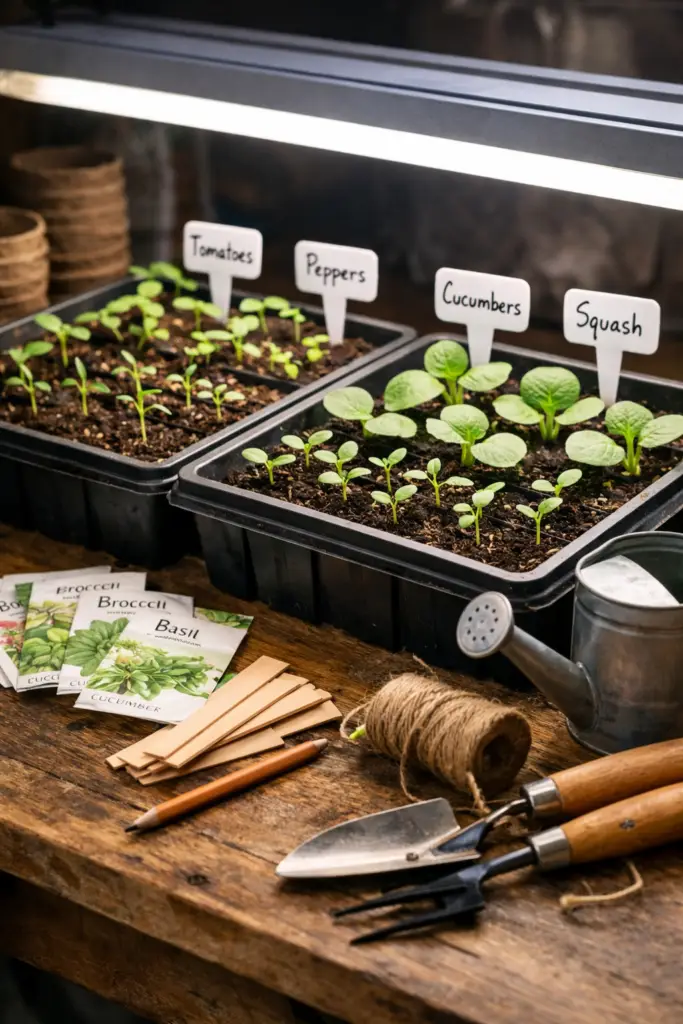
This is when we begin our fast-growing warm-season crops indoors so they’re ready to take off once the weather cooperates.
We start:
- Cucumbers
- Squash
But we’re careful not to start these too early—they outgrow their pots quickly.
What We Always Direct Sow
Some crops do far better when planted straight into the soil once temperatures allow.
We direct sow:
- Carrots
- Radishes
- Green beans
- Beets
These crops germinate quickly and don’t love being transplanted.
Our Simple Seed-Starting Setup
We’ve learned you don’t need an elaborate system to grow healthy seedlings.
We stick with:
- Basic seed trays
- Good-quality seed starting mix
- Consistent light
- Heat mats
- Steady watering (not overwatering)
Keeping things simple makes it easier to stay consistent—which matters more than fancy equipment.
Hardening Off: The Step We Never Skip
About 7–10 days before transplanting, we begin hardening off our seedlings by gradually introducing them to outdoor conditions.
This helps prevent shock and gives plants time to adjust to:
- Wind
- Temperature swings
- Direct sunlight
Skipping this step is one of the fastest ways to lose healthy seedlings.
Why We Follow a Timeline Instead of “Planting All at Once”
Spacing out seed starting:
- Prevents overwhelm
- Gives us stronger plants
- Makes transplanting manageable
- Extends our harvest season
Homesteading is already full of work—this rhythm helps the garden support our life instead of taking it over.
Final Thoughts
Each year we try to grow a little wiser, not just bigger. Following a Zone 6a seed-starting timeline keeps our garden predictable, productive, and enjoyable.
If you’re staring at seed packets and wondering when to begin, start small, follow your frost dates, and let the season unfold one step at a time.